DOMAIN 3Academic Excellence
Standard 7 - An excellent Catholic school has a clearly articulated, rigorous curriculum aligned with relevant standards, 21st century skills, and Gospel values, implemented through effective instruction.
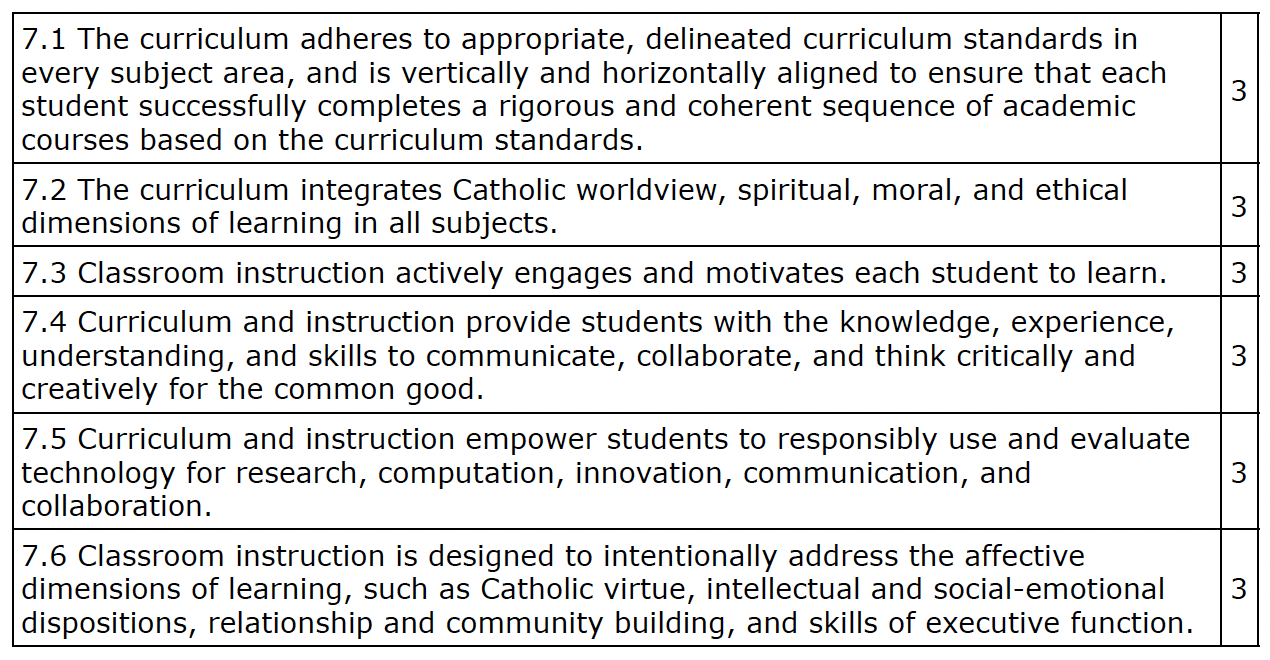
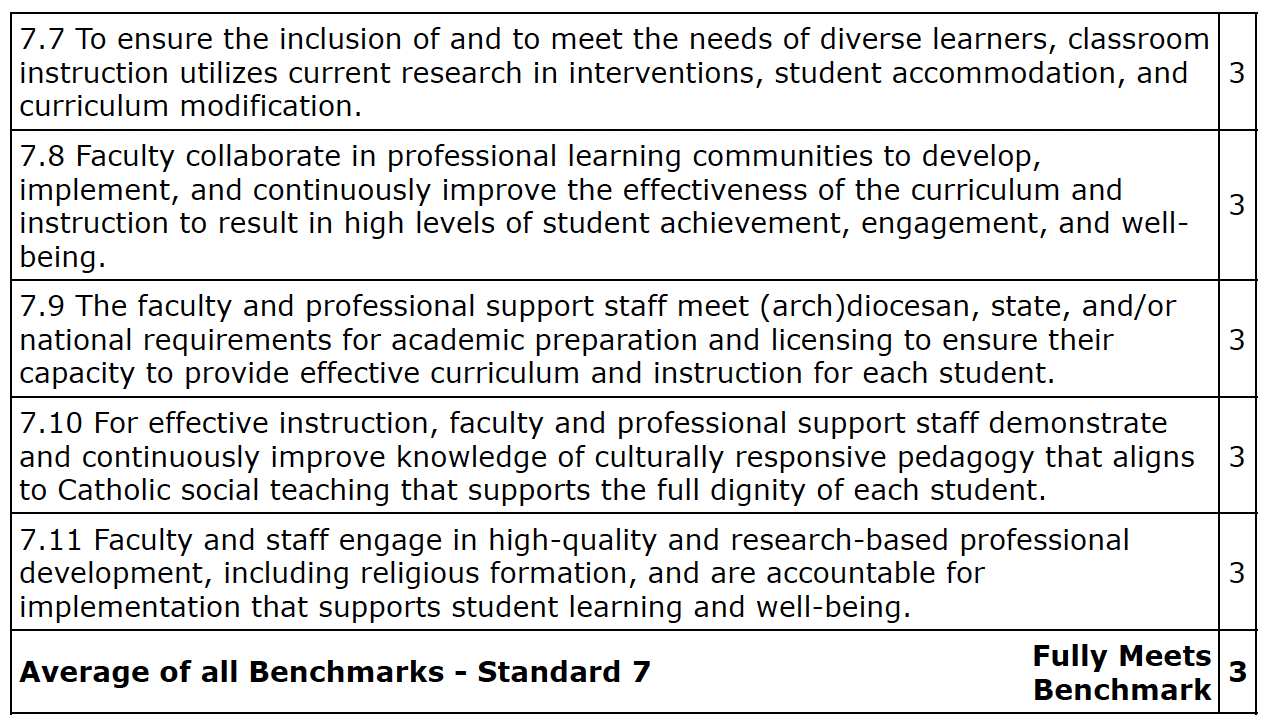
St. Bonaventure School maintains a high standard of academic performance by establishing welldefined expectations for each grade level, planning a structured curriculum, and facilitating collaboration among teachers across different grades. To meet students' varied needs, the school implements differentiated instructional strategies, including small-group instruction, leveled reading materials, technology use, and personalized learning opportunities. Additionally, ongoing assessments, including STAR testing, exit tickets, and Individualized Learning Plans, provide a framework for data-informed teaching. Enrichment programs, executive functioning support, and study skills initiatives further enhance student achievement and engagement. Opportunities remain to strengthen cross-grade collaboration, consistent documentation of differentiated instruction, and expanded student choice in demonstrating mastery.
Catholic identity is intentionally integrated throughout the academic program and school life, fostering spiritual growth alongside intellectual development. Practices such as morning prayer, weekly Mass, Faith Families, virtue-based recognition programs, service projects, and use of the Hallow app provide students with multiple avenues for faith formation. Faculty and staff are supported in their professional and spiritual development through workshops, retreats, and structured collaboration in Professional Learning Communities (PLCs), ensuring instruction is aligned with the school’s mission. Next steps include strengthening documentation of Catholic integration in curriculum planning and encouraging students to extend their faith practices beyond the classroom.
St. Bonaventure School also fosters a safe, structured, and nurturing environment that supports the whole child. Campus upgrades, expanded counseling services, and structured routines promote well-being, while multiple communication channels and family engagement ensure transparency and community involvement. Technology is used thoughtfully to enrich learning and collaboration, with instruction in digital citizenship supporting responsible use. Through ongoing strategic planning, operational oversight, and intentional collaboration, the school sustains a mission-driven culture that emphasizes academic rigor, spiritual formation, and the personal growth of every student.
Standard 7: Narrative Rationale
-
Each grade level identifies clear expectations for student entry and exit skills, ensuring curriculum continuity across grades. Lessons integrate a Catholic worldview and cross-curricular connections for more meaningful learning experiences.
Teachers use a variety of strategies and digital tools such as Google Classroom, Kahoot, CommonLit, Mystery Science, Freckle, and Big Ideas Math to support differentiation, collaboration, and student engagement. Supports include small group instruction, aides, parent volunteers, and choice-based learning activities.
-
Provide structured opportunities for teachers to collaborate across grade levels to ensure standards alignment, address learning gaps, and review priority standards, while developing clear documentation and pacing guides that intentionally integrate Catholic identity and support differentiated, purposeful instruction for all learners.
Establish a dedicated technology committee to guide decision-making and strategic planning. Strengthen instruction on the moral and ethical use of technology (including internet safety and AI awareness), update digital and curriculum platforms as needed, and continue supporting teachers’ personal and professional growth through goal reflection each trimester.
Key Strengths & Growth Areas
Data Library Evidence
School Survey Evidence
Standards of Excellence School Vitality Survey: Parent/ Community and Faculty/Staff - Click HERE
Standards of Excellence School Vitality Survey: Students - Click HERE
Standard 8 - An excellent Catholic school uses school-wide assessment methods and practices to document student learning and program effectiveness, to make student performances transparent, and to inform the continuous review of curriculum and the improvement of instructional practices.
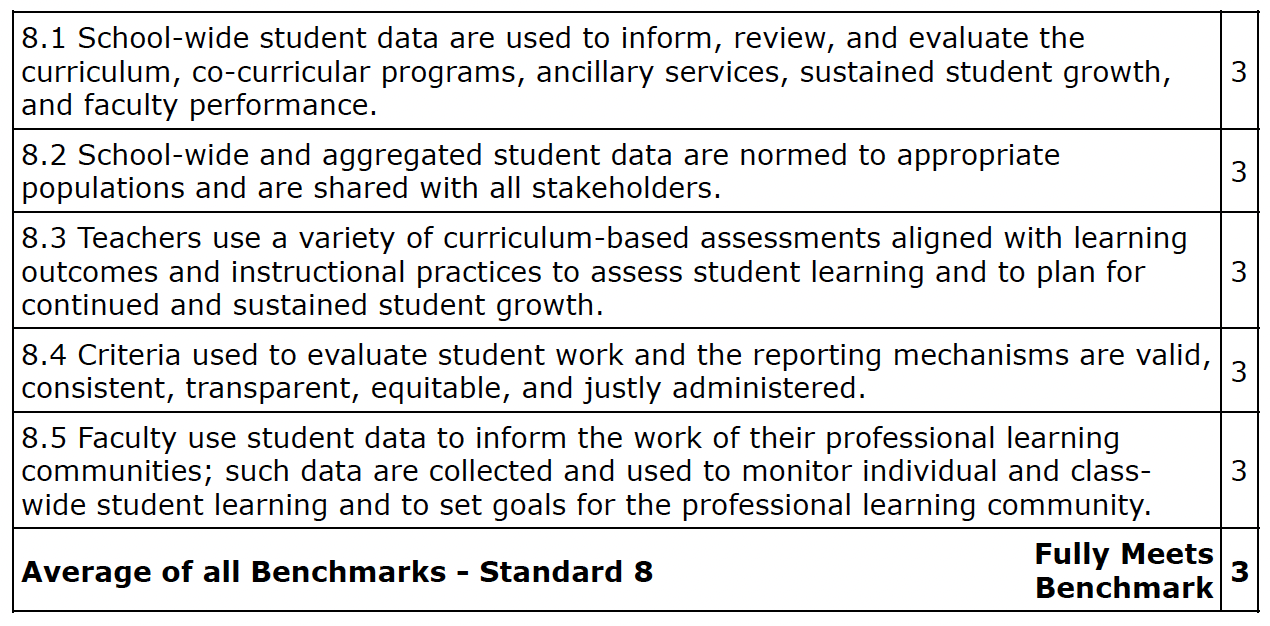
St. Bonaventure School prioritizes the intentional use of school-wide and student-level data to support academic excellence and continuous improvement. Data from STAR assessments, literacy screenings, classroom performance, attendance, and co-curricular participation inform differentiated instruction, personalized learning plans through Freckle, and goal-setting activities, such as Accelerated Reader targets. This information also guides decisions regarding placement in or exit from Diverse Learning Services (DLS), curriculum adjustments, and enhancements to co-curricular programs. By leveraging data in instructional planning and professional development, the school fosters a culture of accountability and growth, ensuring that each student is supported academically, spiritually, and personally.
The school maintains transparency and engagement with families through regular updates on student progress via conferences, trimester reports, and digital platforms, as well as recognition of student achievements, such as AR goals and Honor Roll awards. Faculty use a variety of formative and summative assessments, behavior-monitoring tools, and engaging instructional strategies, such as anchor charts, hands-on activities, and brain breaks, to differentiate instruction and meet diverse student needs. These practices reflect a holistic approach that emphasizes the development of the whole child within a faith-centered environment. Growth opportunities include leveraging school-wide academic data alongside diocesan and public benchmarks and expanding communication accessibility to families in multiple languages.
St. Bonaventure School ensures that evaluation and reporting practices are valid, consistent, transparent, and equitable. Grades are regularly posted in FACTS, syllabi communicate expectations and policies, and standardized rubrics provide fairness in assessing major assignments. Data also drives the work of Professional Learning Communities (PLCs), with monthly, structured meetings, shared curriculum maps, and documented outcomes that foster collaboration and accountability. These structured practices support reflection, goal-setting, and continuous improvement at both the individual and class-wide levels, ensuring student learning is systematically monitored and enhanced across the school.
Standard 8 Narrative Rationale
-
STAR assessments, Freckle, and literacy assessments are used to guide differentiation, create learning centers, and inform student goal-setting. Data from STAR and grade-level assessments also support DLS placement decisions. Grades are posted regularly on FACTS, and PLCs meet monthly with structured agendas and submit notes to maintain accountability and consistency across grade levels.
Student progress is communicated through STAR reports shared with parents at conferences and each trimester, while achievements are celebrated through AR goals, Honor Roll, and other recognitions.
-
Build on the existing strength of rubric use by further standardizing assessments and evaluation practices across grade levels to ensure coherence, clarity, and alignment in measuring student learning.
Sharing school-wide academic strengths, STAR data, and other information with parents, potentially in multiple languages, and reinstating State of the School meetings can enhance transparency and engagement.
Key Strengths & Growth Areas
Data Library Evidence
School Survey Evidence
Standards of Excellence School Vitality Survey: Parent/ Community and Faculty/Staff - Click HERE
Standards of Excellence School Vitality Survey: Students - Click HERE
Standard 9 - An excellent Catholic school provides programs and services aligned with the mission to enrich the academic program and support the development of student and family life.
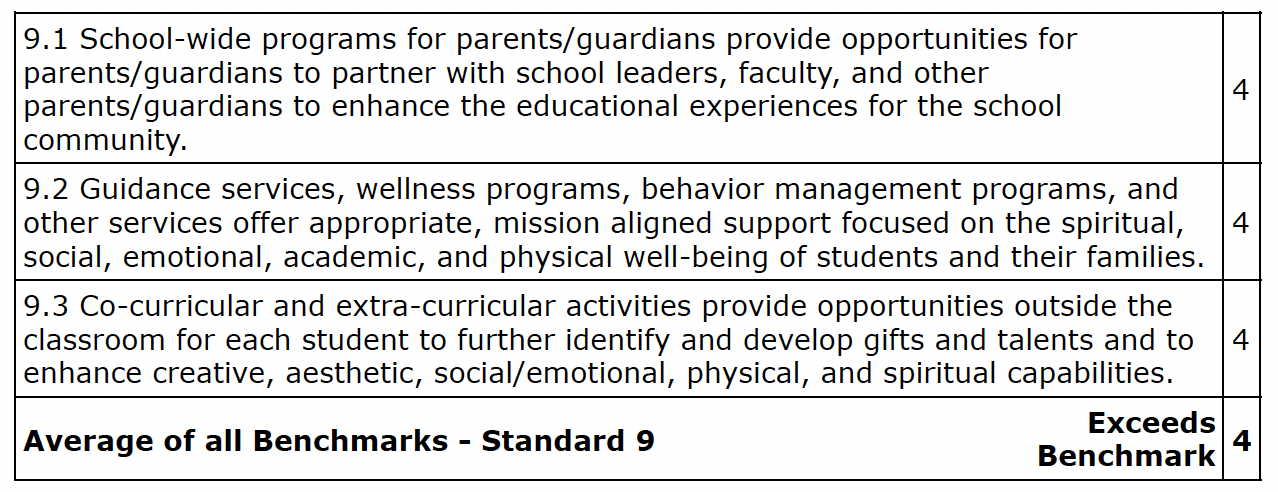
At St. Bonaventure School, families play an essential role in supporting students’ faith formation, academic growth, and participation in extracurricular activities. The school offers numerous partnership opportunities, allowing parents and guardians to engage both in the classroom and in activities beyond the school day, enriching students’ overall educational and spiritual experience. A key area for growth is expanding parent faith formation programs to strengthen the home-school partnership and further support parents as primary educators of their children.
The school demonstrates strength in Student Support Services and Classroom & Developmental Guidance, providing DLS interventions and a full-time counselor who addresses students’ academic, social, and emotional needs. Lessons in conflict resolution, goal setting, and stress management are rooted in Catholic values, fostering holistic student growth. Opportunities for improvement include enhancing parent engagement with the counseling program, implementing systems to track student progress, offering SEL-focused mini presentations, and providing counseling resources on the school website, all of which would strengthen the effectiveness of services and the home-school partnership.
St. Bonaventure School also excels in co-curricular programs, leadership opportunities, and community engagement. Students benefit from a variety of offerings in music, STEM, PE, arts, Spanish, and SEL, as well as leadership programs like Student Council and Ambassadors. Extracurricular activities and school-wide faith events, including Family Masses, foster student development and community connection. A next step is to expand school-led service projects to promote social justice and community engagement, cultivating students’ sense of responsibility and deepening their understanding of Catholic values
Standard 9 Narrative Rationale
-
DLS interventions and a full-time counselor provide academic, social, and emotional guidance, including lessons in conflict resolution, goal-setting, and stress management grounded in Catholic values
A wide range of offerings, including music, STEM, Spanish, PE, art, leadership programs, clubs, athletics, and service opportunities, enhance students’ academic, social, and spiritual development.
-
Increase opportunities for parents to collaborate with the school counselor through SEL-focused presentations.
Provide a dedicated counseling resources tab on the school website to support families.
Key Strengths & Growth Areas
Data Library Evidence
School Survey Evidence
Standards of Excellence School Vitality Survey: Parent/ Community and Faculty/Staff - Click HERE
Standards of Excellence School Vitality Survey: Students - Click HERE
Summary of Domain 3
St. Bonaventure School demonstrates a strong commitment to academic excellence through clearly defined grade-level expectations, aligned curriculum mapping, and consistent instructional practices that promote continuity and rigor across TK–8. Faculty collaborate regularly through structured Professional Learning Communities (PLCs) to analyze data, plan instruction, and share effective strategies, supporting coherence and responsiveness to student needs. Instruction is enriched through cross-curricular integration, project-based learning, and differentiated approaches that allow students to engage with content in meaningful and developmentally appropriate ways. Technology is purposefully integrated to enhance learning, collaboration, and creativity, supported by intentional instruction in digital literacy and responsible use. The school’s curriculum is aligned with California state standards and is strengthened by integrating the Catholic faith, values, and social teachings across subject areas.
Student learning is supported through integrated academic, social, and emotional supports, including the Diversified Learning Services (DLS) program, a full-time school counselor, and targeted interventions informed by ongoing data analysis. A wide range of assessments, including STAR testing, benchmark measures, formative classroom assessments, and rubrics, provide reliable measures of student progress and guide instructional decision-making. Communication of academic progress is timely and consistent, fostering strong partnerships with families. Co-curricular and extracurricular programs further enrich the academic experience, offering leadership opportunities, creative expression, and real-world application of learning. While academic practices consistently meet accreditation benchmarks, opportunities for growth include strengthening documentation of instructional consistency, expanding student choice in demonstrating mastery, deepening vertical collaboration, and enhancing the use and communication of schoolwide data to further support continuous improvement.